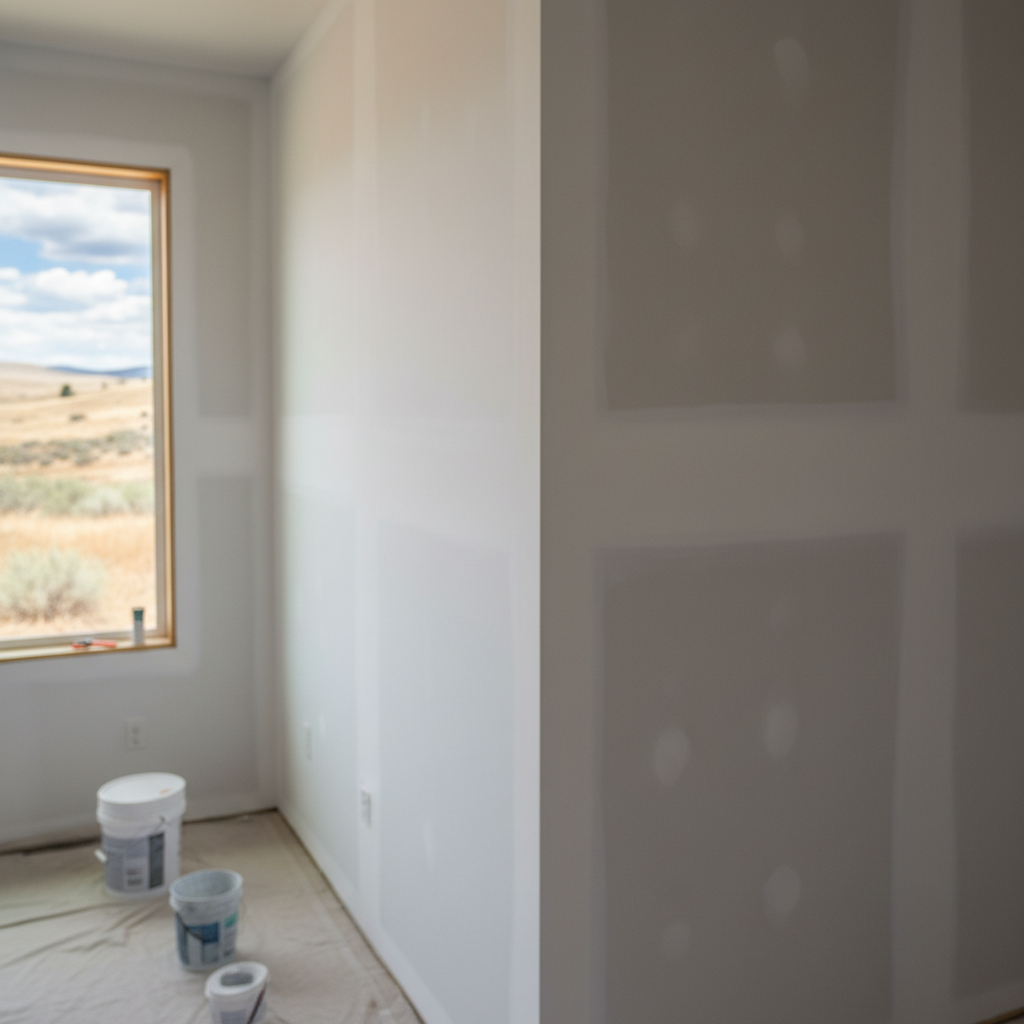
So, you've got new drywall up, or maybe you've done some patching. You're probably itching to get that final coat of paint on and call it done. But hold on a minute. Before you even think about cracking open that paint can, we need to talk about priming. It's not just an extra step; it's the foundation for a good, lasting paint job, especially here in Yakima where our dry climate can really make a difference.
Why Can't I Just Paint Over New Drywall?
You can, but you're gonna regret it. New drywall, and especially the joint compound used for taping and mudding, is super porous. Think of it like a sponge. If you just slap paint on it, that paint gets sucked right in, unevenly. You'll end up with a splotchy, dull finish, and you'll probably need way more coats of paint than you planned. Plus, the texture will be all wrong; you'll see every seam and patch. Primer seals that surface, giving your paint an even canvas to stick to. It's like putting a good base coat on before painting your nails – makes everything look better and last longer.
What Kind of Primer Should I Use for New Drywall?
This is where folks often get tripped up. You don't just grab any old primer. For new drywall, you absolutely need a 'PVA' (polyvinyl acetate) primer or a dedicated 'drywall primer-sealer.' These are specifically formulated to penetrate and seal the porous gypsum and joint compound. They create a uniform surface that paint can adhere to properly. Don't use a regular paint primer that's meant for previously painted surfaces or wood. That won't do the job right on fresh drywall. If you're dealing with any water stains or smoke damage, you'll need a specialized stain-blocking primer, but for standard new drywall, stick with a good PVA or drywall primer-sealer.
How Many Coats of Primer Do I Need?
For most new drywall installations, one good, even coat of quality drywall primer-sealer is usually enough. The key is 'good' and 'even.' You want full coverage, making sure you don't miss any spots, especially over the taped seams and mudded areas. If you're priming a really dark patch that you're going to paint a very light color, or if you're going from a heavily repaired surface, you might consider a second thin coat. But generally, one solid coat does the trick. Don't overdo it; too much primer can sometimes lead to its own issues, like cracking if it builds up too thick.
Do I Need to Prime Before Skim Coating?
No, you don't prime before skim coating. Skim coating is joint compound, and joint compound is porous. You'd be priming a surface that's about to be covered by more porous material. The whole point of skim coating is to create a perfectly smooth, uniform surface out of joint compound. Once that skim coat is completely dry and sanded smooth, that's when you prime it. Think of the skim coat as the 'new drywall' surface itself. You prime the final, finished layer of joint compound before any paint touches it.
What Happens if I Don't Prime My Drywall?
I've seen it happen. People try to save a buck or a step. What you get is what we call 'flashing' or 'ghosting.' The paint will look different over the joint compound areas compared to the drywall paper. It'll be duller, sometimes even a different shade. You'll see every seam and screw pop-out, even if they were perfectly mudded. You'll also use a lot more paint because the unprimed surface will just soak it up. This means more money spent on paint, more time applying extra coats, and still not getting the professional finish you wanted. It's a false economy, plain and simple. You'll end up wishing you'd just primed it right the first time.
How Long Should I Let Primer Dry Before Painting?
Always, always, always follow the manufacturer's instructions on the primer can. Seriously. Drying times can vary depending on the product, humidity, and temperature. Here in Yakima, especially during our dry summers, things can dry pretty fast, but don't rush it. Most primers will be dry to the touch in an hour or two, but they might need 4-24 hours to fully cure and be ready for paint. Rushing it can lead to the paint not adhering properly or causing issues with the primer itself. If you're not sure, give it more time rather than less. A good rule of thumb I tell folks is to prime in the morning and paint in the afternoon, or prime one day and paint the next.
Can I Tint My Primer?
Absolutely, and it's a smart move! If you're going to paint a dark color, or even a really vibrant color, having your primer tinted to a similar shade can make a huge difference. It helps the topcoat achieve its true color faster and often means you'll need one less coat of your expensive finish paint. Most paint stores can tint your drywall primer for you. Just tell them what your final paint color is, and they'll usually mix it to about 50-75% of that shade. It's a little trick that saves time and money on the back end, and it's something we often do on bigger jobs at Yakima Drywall Company.
Look, priming isn't the most glamorous part of a drywall job, but it's probably one of the most critical. Don't skip it, don't skimp on it, and don't use the wrong stuff. Do it right, and you'll have a beautiful, durable paint job that you'll be proud of for years. Do it wrong, and you'll be staring at those ghosted seams every single day. Trust me on this one.